
Myofascial Pain Disorder (Muscle Pain)
Myofascial Pain disorder or MPD is the pain you feel from overactive muscle use. It is characterized by several different locations of pain based on the location of the muscle and "fascia" (thick bands of soft tissue). There are 4 main muscles of note and several minor muscles that cause pain: The Masseter, Medial Pterygoid, Lateral Pterygoid and Temporalis Muscles

Much like a long distance runner who gets sore joints and muscles, the TMJ is under constant strain and stress. The TMJ and it's associated muscles are running a marathon every day!
TMJ Muscle Pain Is 80% of The Problem
The Masseter Muscle
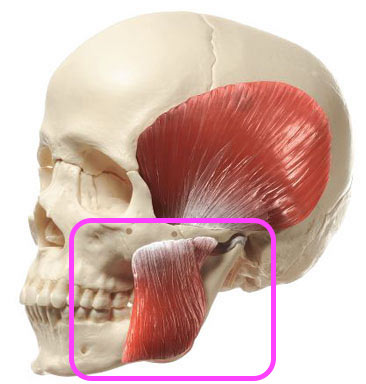
The Masseter muscle is one of the most powerful in the human body. It connects from your cheek bone to the bottom of your jaw bone. It is the muscle that can be seen on a chiseled face. The Masseter may be very large in those who chew gum or those who have TMJ disorder. The Masseter is easy to find all by yourself. By placing your fingers on the side of your jaw and cheeks you will be able to feel this muscle.
When this muscle gets inflamed you will feel tenderness along the length of the muscle but also up under your cheek bone where it attaches. This area is especially sensitive to overuse because it is where the muscle attaches to bone.
The Temporalis Muscle
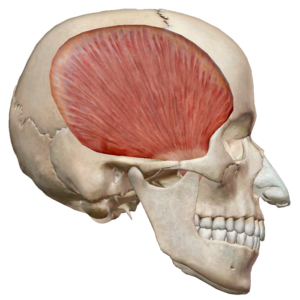
The Temporalis muscle is a fan shaped muscle that attaches to the lower jaw from the side of the head at the temples. It's job is to pull the jaw upward to chew food and talk. This muscle is notorious for causing pain at the area of the temples. Similar to the Masseter muscle this muscle can become fatigued and overused. When this happens its attachment to bone becomes quite tender at the region of the temples but also just above the cheek bone. Skilled clinicians can also find this muscle from inside the mouth attaching to what is known as the coronoid process of the mandible where there can also be pain and tenderness.

The Medial Pterygoid Muscle
The Medial Pterygoid muscle is another muscle of chewing and is associated with TMJ disorder. This muscle is similar to the Masseter muscle but is located on the inside of the jaw instead of the outside. It can be felt by placing a finger in your mouth and pressing toward your lower jaw behind your last molar tooth. The Medial Pterygoid is a powerful muscle that is attached to the base of the skull and the lower jaw. It's job is to powerfully lift the jaw and helps the jaw to swing side to side.
Like the other muscles discussed so far, it can get fatigued from overuse and become inflamed.
The Lateral Pterygoid Muscle
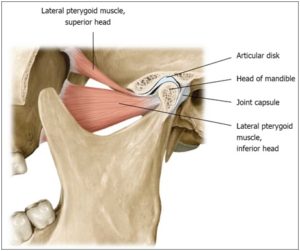
The Lateral Pterygoid muscle is the only muscle that actually attaches to the TMJ itself. It extends from the base of the skull to the TMJ joint and capsule. This muscle is a stabilization muscle that aids in keeping the disk and TMJ in place as it rotates and slides. This muscle also pulls the jaw from side to side.